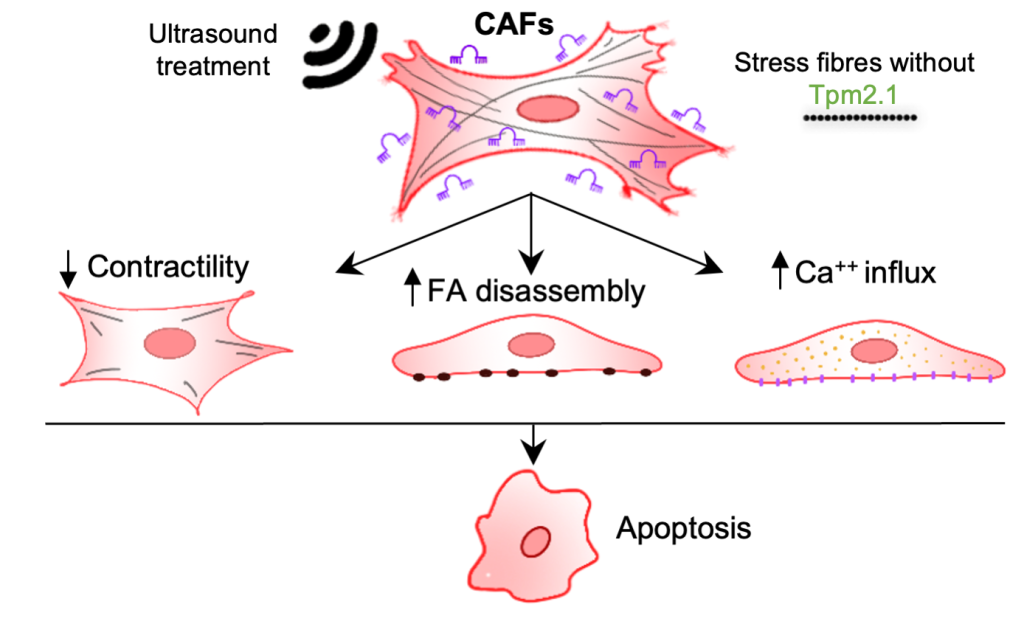
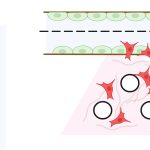
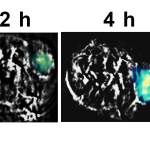
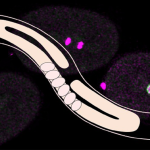
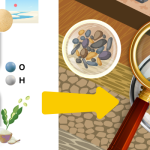
Mechanism of CAF mechanoptosis with ultrasound treatment (Image Courtesy: Gomathi Sankar)
Tumour progression is inherently influenced by its microenvironment (“tumour soil”) rather than the cancer cells themselves. A major component of this milieu are cells called cancer-associated fibroblasts (CAFs). CAFs orchestrate extracellular matrix remodeling, modulate tissue mechanics, and establish a permissive stromal (supportive tissue) niche that supports tumour proliferation, invasion, and therapeutic resistance. Despite their central role in shaping tumour biology, CAFs remain largely unaddressed by conventional anticancer regimens.
In a recent study published in Biomaterials, researchers from The Mechanobiologics Lab led by Ajay Tijore, Assistant Professor in the Department of Bioengineering, IISc, explored a novel strategy to target the tumour stroma by selectively killing CAFs using mechanical forces generated by low-frequency pulsed ultrasound. This selective vulnerability arises from the altered mechanobiological properties of CAFs.
Crucially, the team used patient derived CAFs isolated from oral tumours, which enabled them to capture the biological heterogeneity in oral cancer. Across multiple patient cohorts, they observed consistent mechanoptosis (rupture of cancer cells due to mechanical forces) and robust response to ultrasound treatment, highlighting the translational promise of this strategy.
By destabilising the stroma or tumour soil, this approach could weaken the protective microenvironment that diminishes the efficacy of chemotherapy and immunotherapy. Rather than focusing solely on the tumour core, the researchers demonstrate the potential of reengineering the stromal ecosystem that fortifies tumour progression – targeting soil that facilitates seed growth.
The findings represent a step towards stromal-targeted mechanotherapy, where the focus shifts from killing cancer cells to reprogramming or eliminating the tumour-supportive stroma. Such mechanotherapy can complement current chemotherapeutic approaches in cancer treatment.
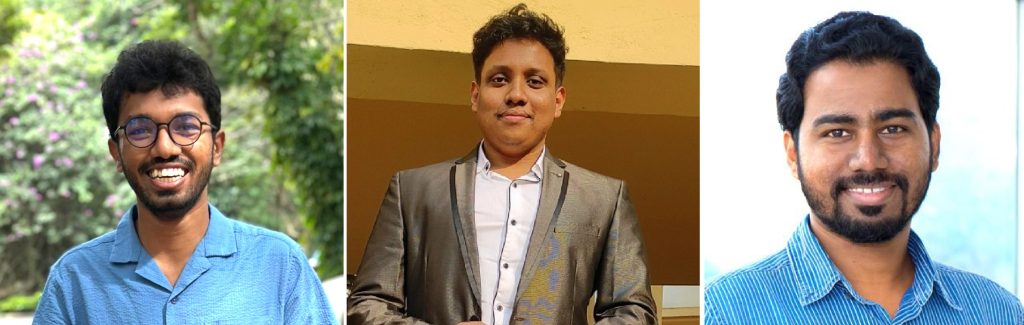
From left to right: Gomathi Sankar, Arka Roy Choudhury, Ajay Tijore (Photos courtesy: Gomathi Sankar)