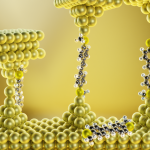
Durga Prasad Hari’s lab harnesses the strain energy of small-ring molecules for unique chemical transformations

Durga Prasad Hari’s day typically starts at 8.30 am with a brief visit to his lab where he discusses progress and plans the day ahead with his students. His lab at the Department of Organic Chemistry, IISc, is a classic wet chemistry lab, one where molecules are built, broken, and decoded to understand the behaviour of existing compounds or to synthesise new ones.
From simple aliphatic chains to complex cyclic systems, chemists like Hari constantly investigate diverse structures and reactions between different kinds of molecules. Among these, strained molecules occupy a particularly fascinating space. One can loosely imagine them as compressed springs that have inherent energy due to geometric distortion – having atoms squeezed or twisted into unnatural positions. These molecules can be triggered to release this stored energy, enabling unique and often powerful chemical transformations.
It is this energy of strained molecules that lab hopes to harness to build complex, medicinally relevant structures. However, working with such strained systems is far from trivial – it is a delicate dance between reactivity and control.
Hari’s journey into organic chemistry was not straightforward. His initial inclination was toward mathematics. “More than a specific subject, I like to take on challenges – if you tell me mathematics is challenging, I will take that,” he elaborates.
However, as he became aware of the broader opportunities that chemistry might offer, he gradually found himself drawn to the field. During his Master’s studies at IIT Madras, he experienced a pivotal moment when a routine reaction yielded an unexpected product. “I thought, ‘Have I made something new? Something not reported?’” This epiphany sparked a lasting curiosity that drove him towards a career in research.
The core of his lab’s research lies in exploiting strain energy to design innovative molecular architectures.
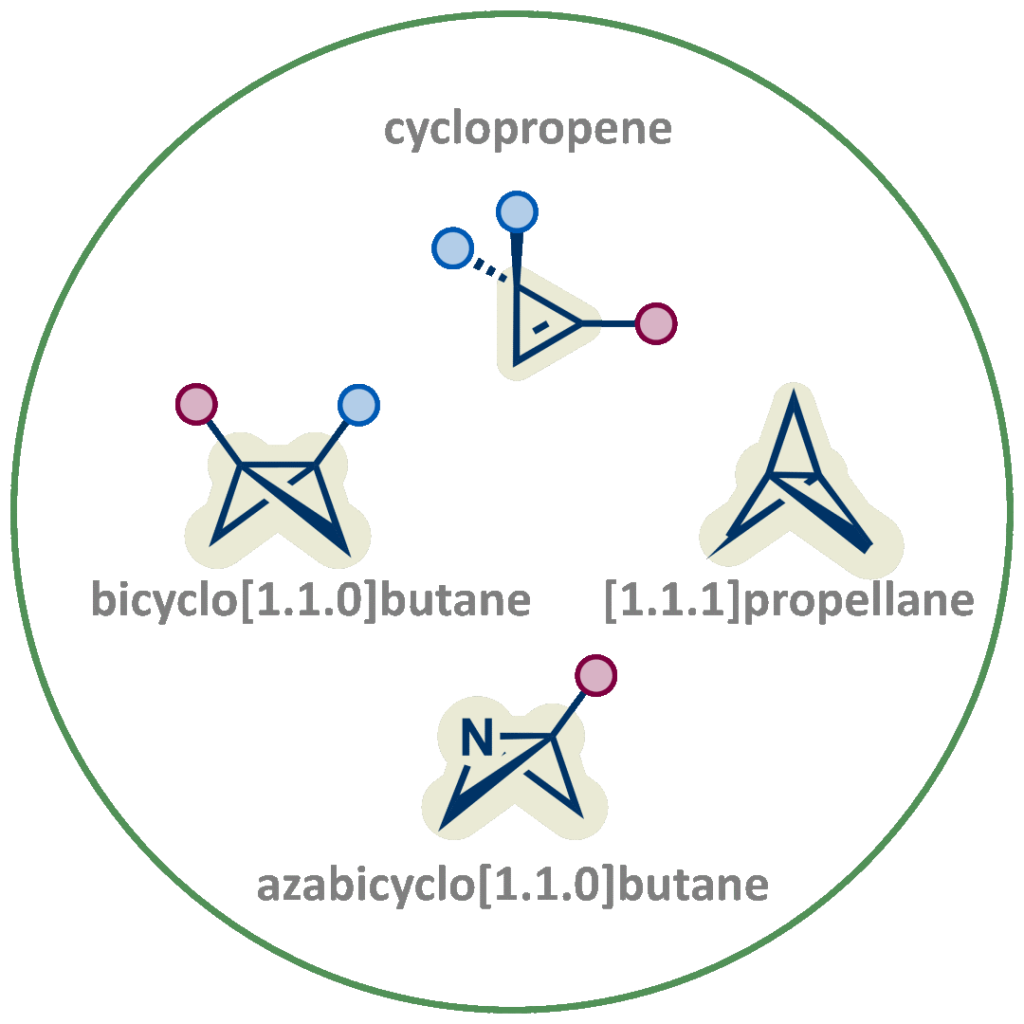
A major focus is the synthesis of bioisosteres – functional groups (clusters of atoms) with specific properties or chemical substituents that mimic the properties of existing molecular frameworks in biological molecules while offering improved potency or physicochemical properties.
Searching for or building a potent bioisostere can be likened to finding a player with the same physical attributes as the biological molecule but with superior performance on the field. Such replacements are invaluable in drug design, where even subtle structural modifications can significantly enhance a molecule’s activity, selectivity, and stability. A small change in structure can influence how a drug binds to its biological target and how resistant it is to metabolic breakdown. In many cases, replacing a conventional molecular frameworks with a well-designed bioisostere can improve solubility, reduce toxicity, and extend the lifetime of the drug in the body, ultimately leading to safer and more effective therapeutics. A classic example is losartan, a widely prescribed drug for regulating high blood pressure. During its development, a carboxylic acid group present in earlier lead-based compounds was replaced with a tetrazole ring, a five-membered aromatic compound containing four nitrogen atoms. The tetrazole acts as a bioisostere of the carboxylic acid, retaining similar acidity while providing greater lipophilicity and improved metabolic stability.
Hari’s group is specifically interested in developing three-dimensional bioisosteres for traditionally planar aromatic groups like benzene and pyridine. “Flat molecules do not have much direction, but once you move to a three-dimensional framework, interaction with biological targets is much easier and more specific,” he notes. Unlike their aromatic counterparts, these new scaffolds lack reactive bonds and offer a more rigid three-dimensional geometry, which can improve biological interactions. Synthesising these molecules often relies on the clever utilisation of strain energy, combined with activation strategies that use light and/or electricity. In one study, his team developed a method for synthesising a conformationally restricted heterobicyclic scaffold, which may find applications in synthetic and medicinal chemistry.
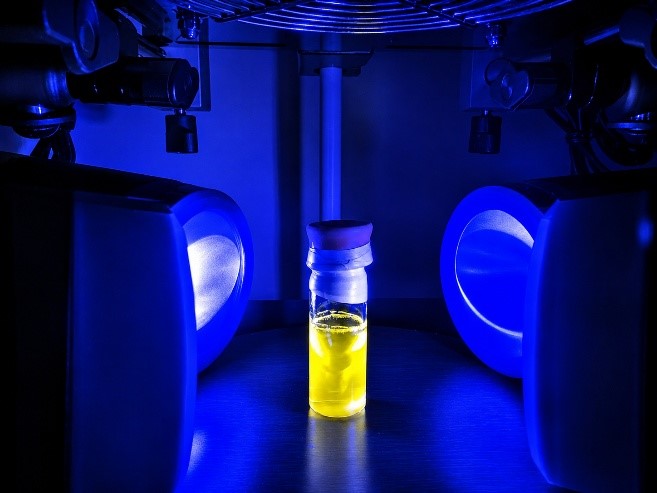
In addition to bioisosteres, the lab also explores the chemistry of carbenes – reactive species characterised by a neutral carbon atom bearing two unshared electrons. Typically, carbene generation by irradiation results in a mixture of singlet and triplet carbenes, posing a challenge of selective control. Hari’s group addresses this difficulty by developing strategies to selectively generate triplet carbene, thereby enabling more controlled and predictable reactivity. Operating as diradical species, these triplet carbenes are used in reactions such as insertion, cyclopropanation, and dimerisation.
Another intriguing aspect of his research involves deconstructive strategies, where simple cyclic molecules are systematically broken down into functionalised acyclic systems. Such deconstructive strategies are important in skeletal editing, which seeks to remodel the molecular framework involving inserting or deleting an atom or bond. Using this strategy, in another study, the group reported the first electrochemically interrupted Dowd-Beckwith reaction for cyclic ketones, allowing the selective cleavage of unstrained carbon-carbon bonds, which are otherwise difficult to activate. The method not only expands the synthetic toolbox but can also be used in preparing derivatives of some natural products.
Apart from his ongoing experimental work, Hari continues to nurture his interest in mathematics through computational chemistry. Using Density Functional Theory (DFT), he complements experimental studies by probing reaction pathways, intermediates, and energy profiles at the molecular level. “When computational results align with experimental observations, it feels like solving a puzzle where every piece fits perfectly,” he says, adding that he finds this interplay between theory and experiment scientifically rewarding.
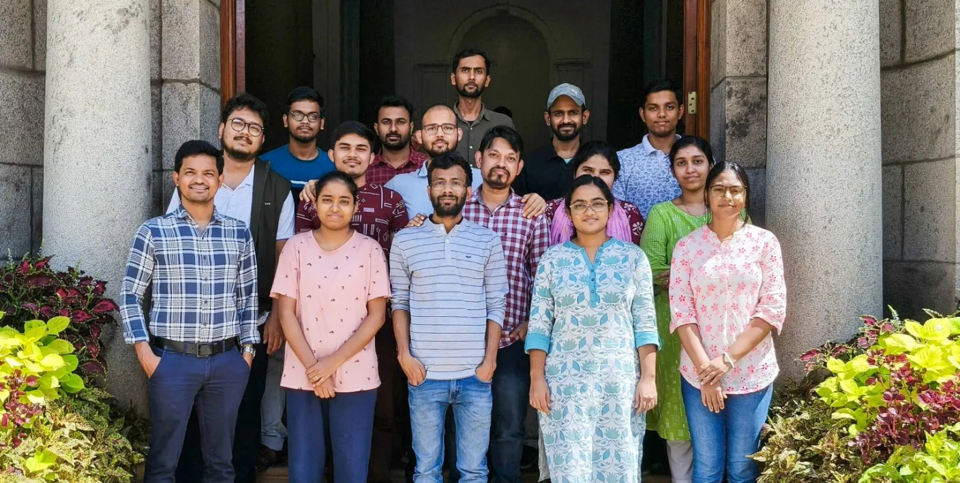
When it comes to mentorship, Hari believes in giving students freedom. “I discuss what they think of science before telling them what they need to do,” he explains. This approach has yielded impressive results, including a recent publication in the Journal of the American Chemical Society in which the team developed a method to construct complex spiro compounds – those with multiple interconnected rings – in a single step, “like a magician stitching different rings together,” he adds.
Hari also enjoys teaching – he received the Excellence in Teaching Award given by IISc in 2023. For him, teaching goes beyond completing the syllabus – his focus lies in encouraging interaction and curiosity in the classroom, he says. “My real award will be if many of my students make it to academia.”
When he started his lab at IISc, only a handful of groups in India were working on strained molecules. Today, the field is rapidly expanding, particularly because of its relevance to drug discovery. Nevertheless, challenges persist, particularly in synthesising, purifying, and stabilising the highly reactive starting materials.
Looking ahead, Hari seeks to venture into bio-orthogonal and bioconjugation chemistry, exploring how these strained molecules behave in biological environments. He also envisions a stronger integration of machine learning, where predictive models could guide experimental design even before reactions are performed.
Above all, he emphasises resilience in research. “If you don’t get stuck, then it’s not research. And if you get stuck, that’s completely normal,” he explains. He encourages students to step back when needed, reassess, and then move forward again.
Outside the lab, he tries to maintain a balanced lifestyle, enjoying swimming, running, preparing meals, and spending time with his family. He hopes that when his students see him prioritising well-being alongside research, they learn to do the same. “Sometimes you don’t tell, you show,” he emphasises.