Non-metallic molecules are increasingly finding use in electronic applications
In grade seven chemistry class, we were taught that polymers are almost entirely non-metallic, hence they cannot conduct electricity. They are insulators and can thus be used to insulate metallic wires. But it turns out that that statement is not completely true. In 2000, the Nobel Prize in Chemistry was awarded to three scientists, Alan Heeger, Alan MacDiarmid, and Hideki Shirakawa, for synthesising electrically conducting polymers.
Shirakawa worked on polymerising acetylene, an organic compound, to make sturdy films and studied the properties of the polyacetylene product. In 1977, the three of them showed that performing a chemical process termed doping – inserting a foreign atom into a molecule – on a polyacetylene film made it 109 times more conducting than it was originally. The conductivity of the ‘doped’ form of polyacetylene increased from around 10-4 S/m to 105 S/m (For comparison, the conductivity of silver and copper in the electrical wires that run through our homes is around 108 S/m). The researchers published their findings in a 1977 paper in the Journal of the Chemical Society, Chemical Communications. Their discovery of polyacetylene as a conductive polymer gave birth to the field of organic electronics.
Almost half a century later, we now have millions of such polymers that have been tested for their electrical properties. These polymers can be found in wide-ranging applications in our everyday lives. For example, PEDOT:PSS, a conducting polymer, is a key component of the touchscreen displays in our smartphones. Research on such polymers, therefore, has grown exponentially in recent years.
A subset of these conducting polymers consists of light-emitting organic molecules, which form the basis for Organic Light Emitting Diodes (OLEDs).
In 2012, Rajamalli P, now Assistant Professor in the Materials Research Centre, IISc, had just started a postdoc position at the National Tsing Hua University, Taiwan. Ten days after she joined, her PI called her and showed her some device prototypes that the lab was developing based on light-emitting organic molecules. “The first time that I saw those lights, I said yes, I want to work on them,” she recalls.
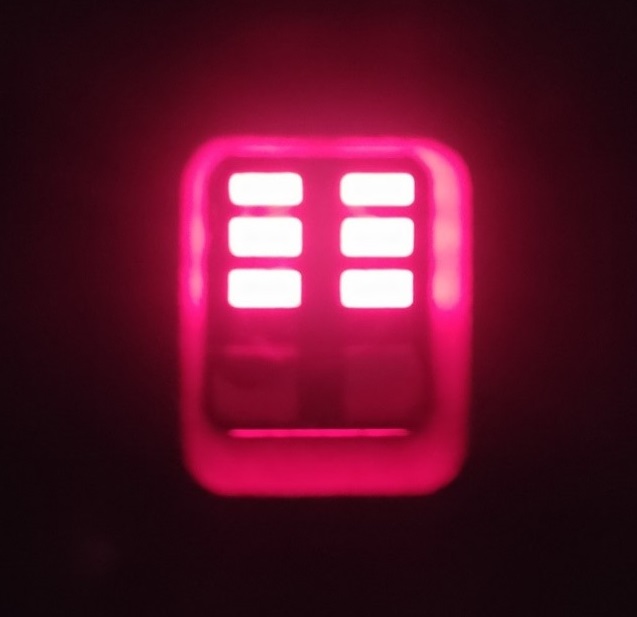
When these molecules are sandwiched between two electrodes and under applied voltage, the emitters are excited to high energy levels, and when they return to their ground state, the excess energy is released as light. Researchers have been working on such molecules for years because of their interesting emissive properties – they are the building blocks of commercially used OLEDs.
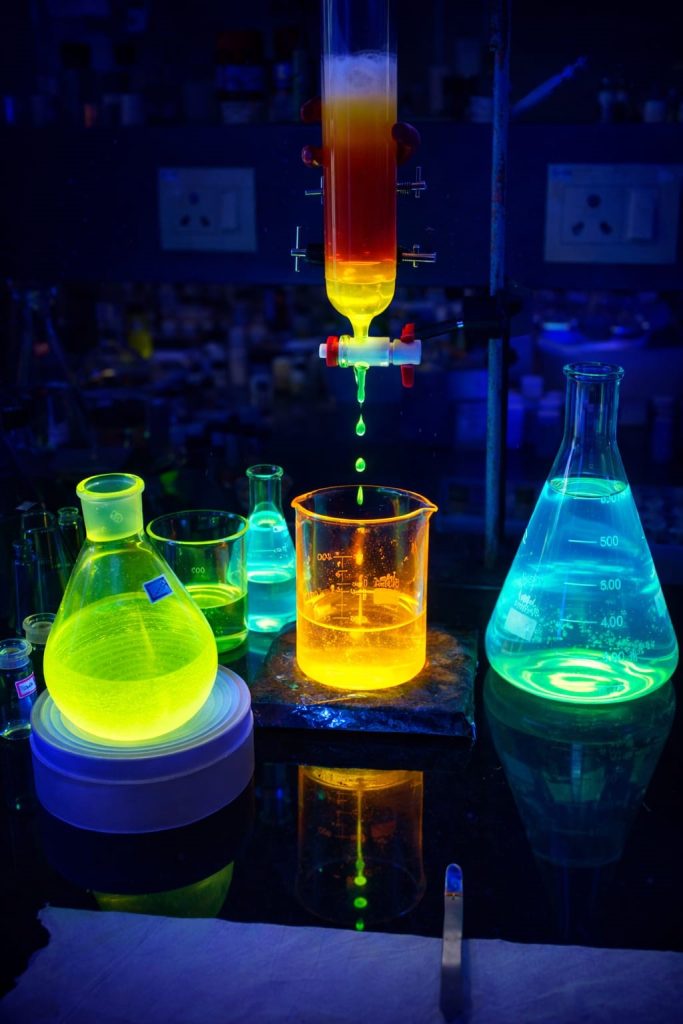
After working for seven years on these molecules abroad, Rajamalli started her own lab at IISc. The lab works on synthesising novel and more efficient molecules for OLEDs. They primarily work with thermally activated delayed fluorescence (TADF) molecules. TADF molecules are made of pure organic molecules and do not require any noble or heavy metals, such as iridium and platinum. This makes them both cost-effective and sustainable. A major challenge is that TADF-based devices, especially blue light-emitting devices, are highly unstable, which means that the operational lifetime of the devices is short – this is something that researchers like Rajamalli are trying to solve.
Apart from emitting light, organic molecules also have energy-related applications. Researchers in the lab of Satish Patil, Professor at the Solid State and Structural Chemistry Unit (SSCU), work on designing semiconducting polymers for organic solar cells, organic field-effect transistors, TADFs, singlet fission, and energy storage devices.
Organic molecules, unlike their inorganic counterparts, degrade in the environment over a period of time. Satish’s lab works on improving the stability of these molecules, specifically on air-stable n-channel conjugated polymers. They are also working on developing compact transparent solar cells, which can be fitted in individual houses, for example, blending seamlessly with windows.
Organic n-type semiconductors, which are used to connect circuits in OLEDs and organic solar cells, also exhibit poor performance due to their low ionic mobility, which is constrained by fundamental limits imposed by their natural properties. Satish’s lab works on singlet fission – a quantum process in which one high-energy photon is converted into two excitons, which can double the quantum efficiency. His lab has shown that with precise molecular engineering, organic molecules can exhibit “band-like” transport – a phenomenon that is typically seen only in high-quality silicon.
The key to achieving such properties lies in pushing organic molecules beyond their fundamental limits. Satish’s team first analyses the molecules and checks for what the limiting factors are: it could be a specific chemical bond, their charge carrier mobility, their reactivity with oxygen and water, or something else. “We design these materials very rationally. For example, these materials have very low charge carrier mobility, so we design organic semiconductors that have higher mobility,” he elaborates. The team does this by playing around with the backbone and side chains in the molecular structure.
Apart from designing new molecules, researchers at IISc also utilise such materials for real-life applications. Subho Dasgupta, Associate Professor in the Department of Materials Engineering, uses organic materials to make flexible electronics. His lab primarily focuses on oxides and diverse 2D semiconductors to print electronics. Notably, conventional semiconductors for electronics, such as silicon, are rigid and not bendable. Subho’s lab thus prefers to use oxide or 2D semiconductor inks to print electronic devices and components on flexible substrates, such as inexpensive polymers and paper.
However, when it comes to insulator materials, they typically favour organic composite solid polymer electrolytes (CSPE). In this regard, Subho points out a long list of unique advantages of CSPE – ease of fabrication at low temperatures, low operation voltage, high capacitance, extremely conformal interface, easy printability, and flexibility. This makes the entire printed device or circuit element useful for a large variety of printable electronic applications.
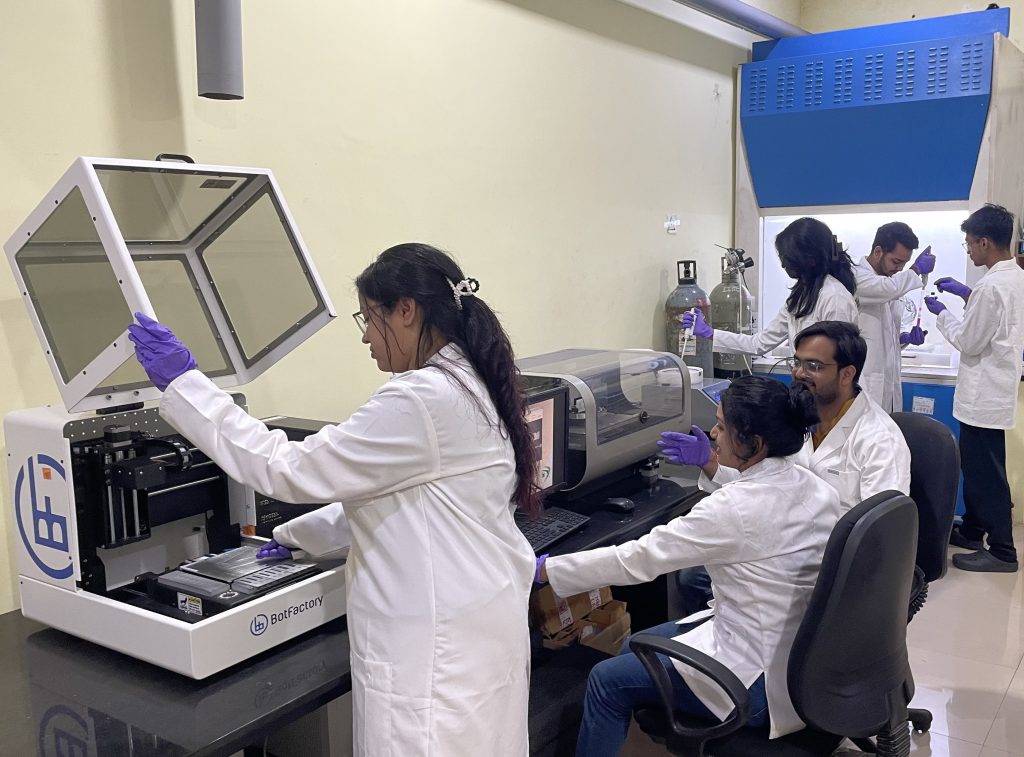
In recent years, organic electronics have soared in popularity because they are generally more environmentally friendly compared to inorganics and more cost-effective. “If you are making a device based on silicon, everything is a very energy-dense process,” Satish explains. Devices based on organic electronics don’t need such energy-dense processes, he adds.
But technologies based on organic electronics have their own challenges. For one, some of these materials easily degrade in the presence of water and oxygen in some environments. Their electrical conductivity is still low compared to inorganic materials. Other disadvantages include limited performance reliability of different kinds, like electric stress tolerance, low electron mobility, and so on, Subho points out.
Yet another challenge is the lack of an ecosystem to build devices based on organic electronics in India. This can impact device testing, fabrication, and scaling up production.
Despite these challenges, the applications are promising. Think of how thin laptop screens have become, thanks largely to OLEDs, which have significantly reduced the number of layers required for displays. Companies like Samsung and LG are also working on rollable and foldable displays based on organic electronics. This would not have been possible with silicon, which is highly covalent and therefore rigid.
“Silicon can’t reach everywhere, it cannot address all the niche application domains … [especially in] applications that require bendability, flexibility, low temperature processability, or substrate independence,” Subho says. “Organic electronics, being more flexible, can therefore have their own niche market.”