Yagnaseni Roy’s lab seeks to engineer a circular future through sustainable separation
At the intersection of chemistry, engineering, and sustainability lies a deceptively difficult problem: separating components from mixtures efficiently and responsibly. Modern industrial processes often rely on energy and resource-intensive methods that exact a heavy environmental toll.
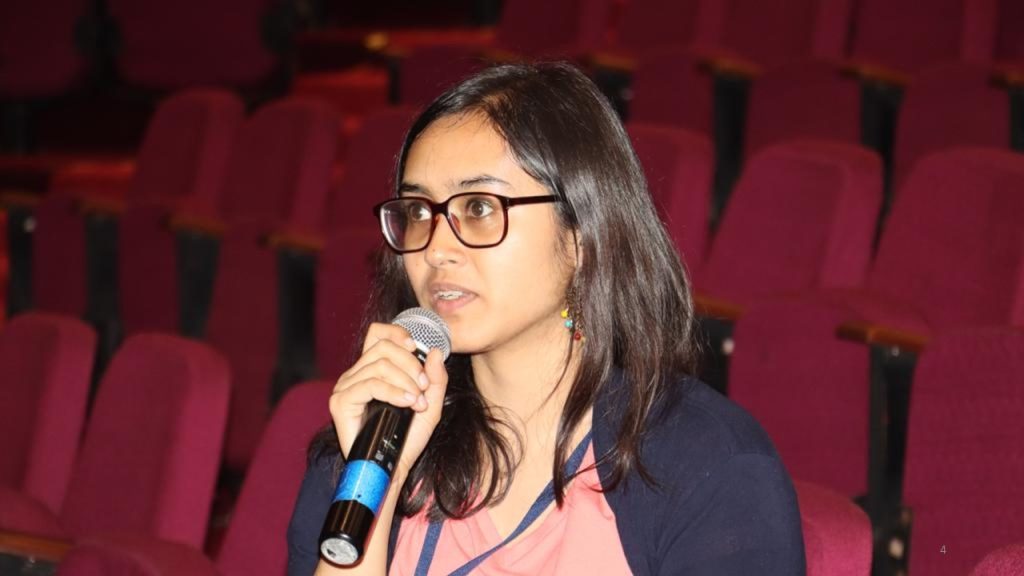
At the Centre for Sustainable Technologies (CST), Yagnaseni Roy, Assistant Professor, heads the Sustainable Separation Solutions (S3) lab, focusing on membrane-based separation techniques, as well as other technologies, to restore some balance in maximising economic output while minimising ecological burden. Her work has direct applications in diverse areas, from curcumin extraction to arsenic bioremediation.
In school, Yagnaseni was passionate about physics. Entropy, in particular, intrigued her. Her foray into research was through mechanical engineering – she was one of only four girls in of a batch of 240 students in her undergraduate class. After her Bachelor’s degree, she joined John Lienhard V at the Massachusetts Institute of Technology (MIT) for her Master’s, and stayed on for a PhD in mechanical engineering, driven by her interest in the fundamentals of thermal and fluids engineering. “When I joined, it was a bit of a bummer for me initially because his focus started shifting towards nanofiltration and desalination,” she says, laughing. “That was where the funding was, around 15 years ago.”
She adapted, allowing her horizons broaden. “When you commit yourself to something, you do eventually develop a liking for it,” she reflects. Nanofiltration pulled her into chemical engineering territory, and Yagnaseni admits that the learning curve was steep. But her mechanical engineering background gave her a unique lens through which to view membrane technology – she could connect mechanical engineering fundamentals to the chemical behaviour of membranes.
Her career took a definitive turn toward sustainability during her post-doctoral research at the Universiteit Twente in The Netherlands, where she worked on regenerating biodegradable solvents for the wood pulping industry using membrane-based separation techniques. “By then, I had realised the need for research in sustainability, because it was an aspect that I hadn’t thought about much earlier,” Yagnaseni says. “It is a question of how we can improve our society, while at the same time not impacting our environment.” Her eagerness to work on this perspective is what brought her to CST, where she now works on sustainability issues.
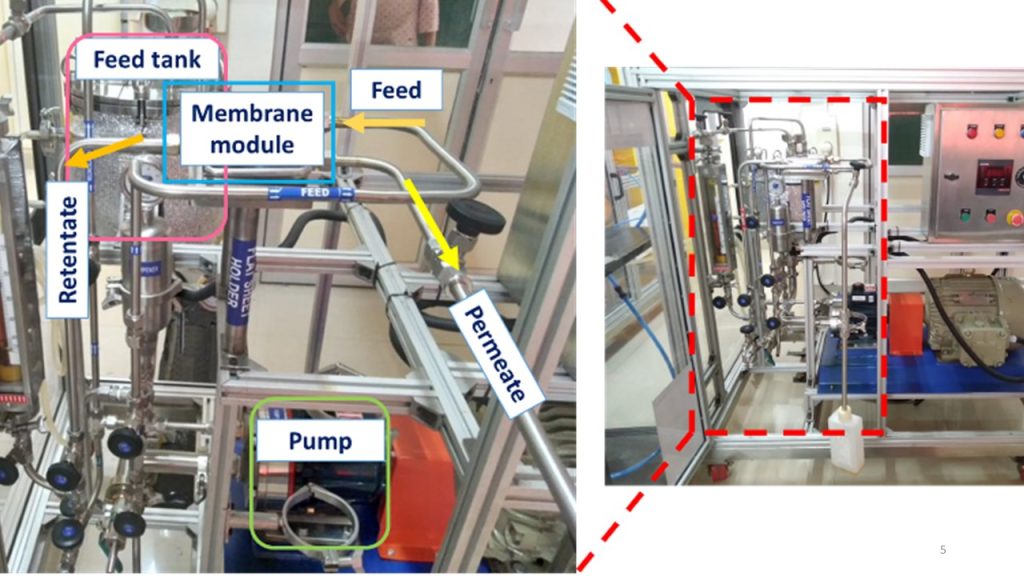
A fundamental theme in Yagnaseni’s work has been solvent recovery, a process critical to pharmaceutical and chemical industries, where reagents such as ethanol or acetone are intensively used as solvents. These reagents should ideally be recovered and reused after extracting the target compounds from them, and in cases where this is done, evaporation-based methods are most commonly used to recover the solvent while isolating the target product. In certain cases, evaporation-based solvent recovery is not only energy-intensive but also fails to yield back the pure solvent due to the need for additives to enable the separation; the lowered purity of the solvent implies downcycling it to lower value uses. Yagnaseni advocates for a more effective alternative to achieve circularity.
Of course, this is easier said than done. Consider the seemingly simple case of ethanol and water. Despite ethanol’s boiling point (78oC) being much lower than water, they cannot be separated by simple distillation, because they form an azeotrope – a mixture that maintains a constant boiling point and identical composition in liquid and vapour phases. Thus, it acts like a pure liquid, which renders distillation impractical.
The conventional method to separate azeotropes involves adding a third liquid, but that is counterproductive to the goal of retrieving pure ethanol. Instead, a selectively permeable membrane can be used, which would allow only the passage of water – effectively filtering out ethanol.
One of the most relevant applications of this class of membrane-based methods using organic solvents, Yagnaseni realised, was in the extraction of curcumin from turmeric. Curcumin is a natural phytochemical with excellent pharmaceutical and nutraceutical applications. Ethanol is one of the solvents used for its extraction from turmeric. But once extracted, the separation of curcumin from ethanol is usually done by evaporating the latter. Together with her team, Yagnaseni has successfully redesigned the industrial curcumin isolation scheme using the membrane-based separation technique.
This process not only allows for ethanol to be reused but also makes it energy-efficient – about 50 times more efficient than conventional evaporation. Yagnaseni and her team have patented this membrane-based technology to isolate phytochemicals such as curcumin.
This membrane-based approach for solvent recovery also powers the lab’s most ambitious project yet: arsenic bioremediation from groundwater. Inorganic arsenic is a natural contaminant present in groundwater; if ingested, it could lead to cancer and severe cardiovascular disorders. “Inorganic arsenic is severely toxic, but after conversion to its organic forms, the overall mixture is significantly less toxic,” Yagnaseni says. This difference in toxicity is exploited in her lab’s innovative mechanism to not only capture toxic arsenic but also prevent it from re-entering the environment by bioremediating it after isolation.
Her team has synthesised biodegradable adsorbent beads made of chitosan, a derivative of chitin (a sugar found in cell walls of fungi and the exoskeleton of arthropods), incorporated with iron oxyhydroxide and aluminium hydroxide. These beads can capture inorganic arsenic from contaminated water. Once saturated, the beads are treated with sodium hydroxide to extract the arsenic, and they can be reused several times before their safe disposal. The aforementioned membrane technology then separates the sodium hydroxide from the arsenic, enabling its circularity, similar to the theme applied to the pharmaceutical applications.
Then, the toxic inorganic arsenic is converted into a less toxic organic form, by the action of nature’s unassuming workhorses – microbes found in cow dung. This also opens the scope for coupling this process with biogas production, which utilises the same bacteria. Yagnaseni’s team is currently working on a prototype device that couples these two processes.
“One challenge is that we don’t yet fully understand the reactions. Also, even if we demonstrate it in the lab, there are practical challenges of building the additional chambers for arsenic remediation and dealing with the hazardous waste material, especially in rural areas,” she explains.
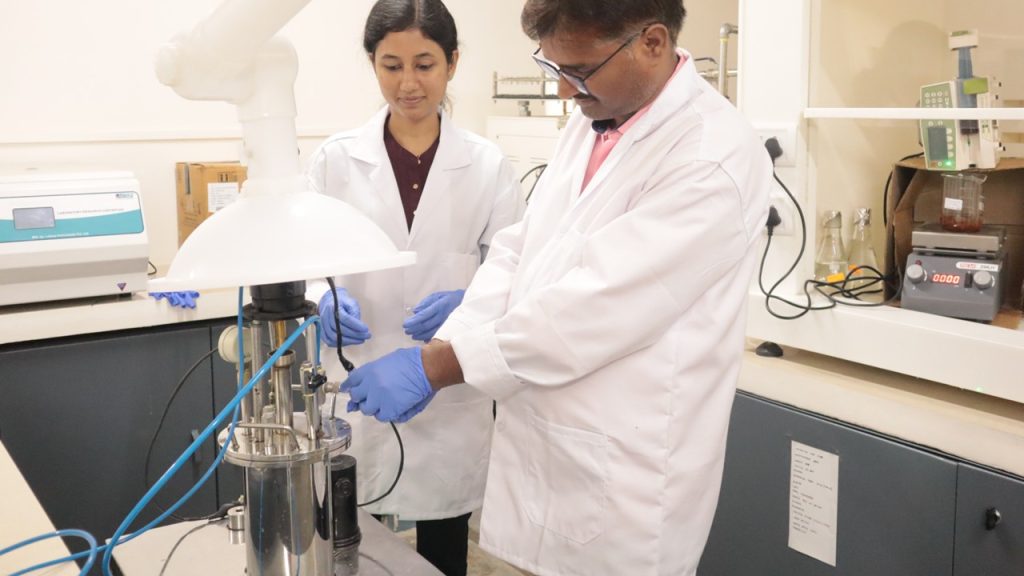
To handle the intensity of these high-stakes projects, Yagnaseni finds balance by turning to a different kind of intensity: martial arts. Over the past two years, she has dedicated around seven hours a week practicing it, which has served as a vital stress outlet and helped her build confidence, she says. She also enjoys reading, though she admits that she often finds herself too worked up by the day’s research to fully relax. While she continues to read occasionally, it is during her annual breaks, that she feels she can truly decompress enough to enjoy them.
Building this mental and physical resilience is essential, she says, as the obstacles to sustainable development often extend beyond the lab. A major head scratcher is that adoption of solutions remains slow. There is inertia among industrialists to shift towards newer techniques.
“It is one thing to do research and know something is possible, but whether it’s adopted or not is a different ballgame. Many of the problems that industries face are not really ‘novel.’ It is often an issue of adopting techniques already established or proven. That leads to a lack of sync between academia and industry: people in industries are not interested in technicalities as much as profitability or scalability, and here we are occupied mostly with the technicalities,” Yagnaseni explains, with a sigh.
Another source of frustration is decision-makers’ tendency to overlook issues that are not deemed immediate. This leads to lesser funding for such projects, she explains. “My research on solvent recovery or arsenic remediation might not be the burning issue right now. People might realise its importance only a few years down the line and then fund further research into it.”
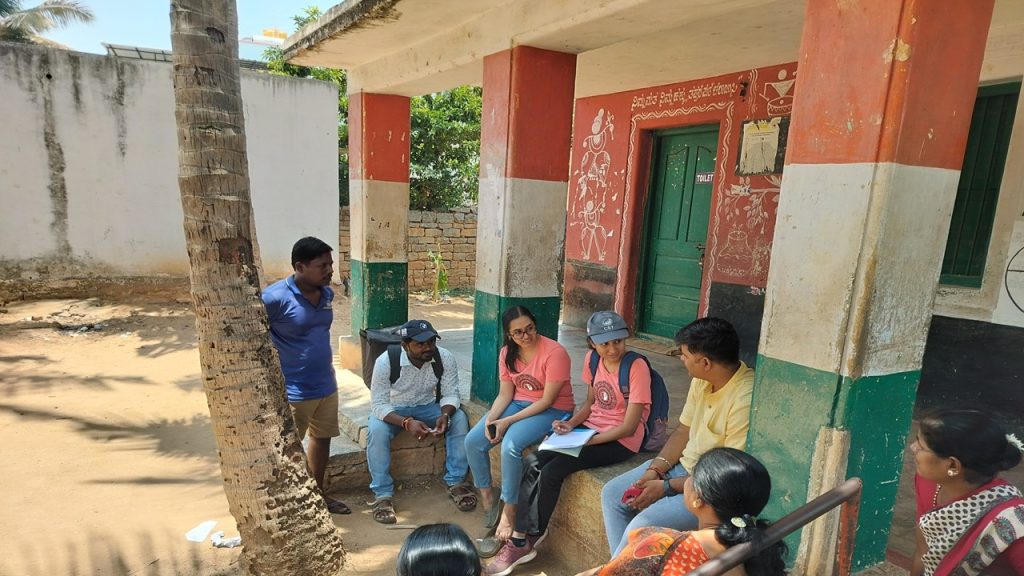
The shift toward sustainable development is gradual, but the groundwork is already being laid. For Yagnaseni, this means balancing high-level research with grassroots impact – she has conducted workshops on waste management in schools such as Kendriya Vidyalaya (KV) in Malleshwaram, Bengaluru. Her team has also undertaken field visits to Chikkaballapur to educate people living there about groundwater fluoride remediation. These efforts, according to her, contribute to the broader goal of ensuring that solutions for sustainable resource management are ready to help where they are needed most.