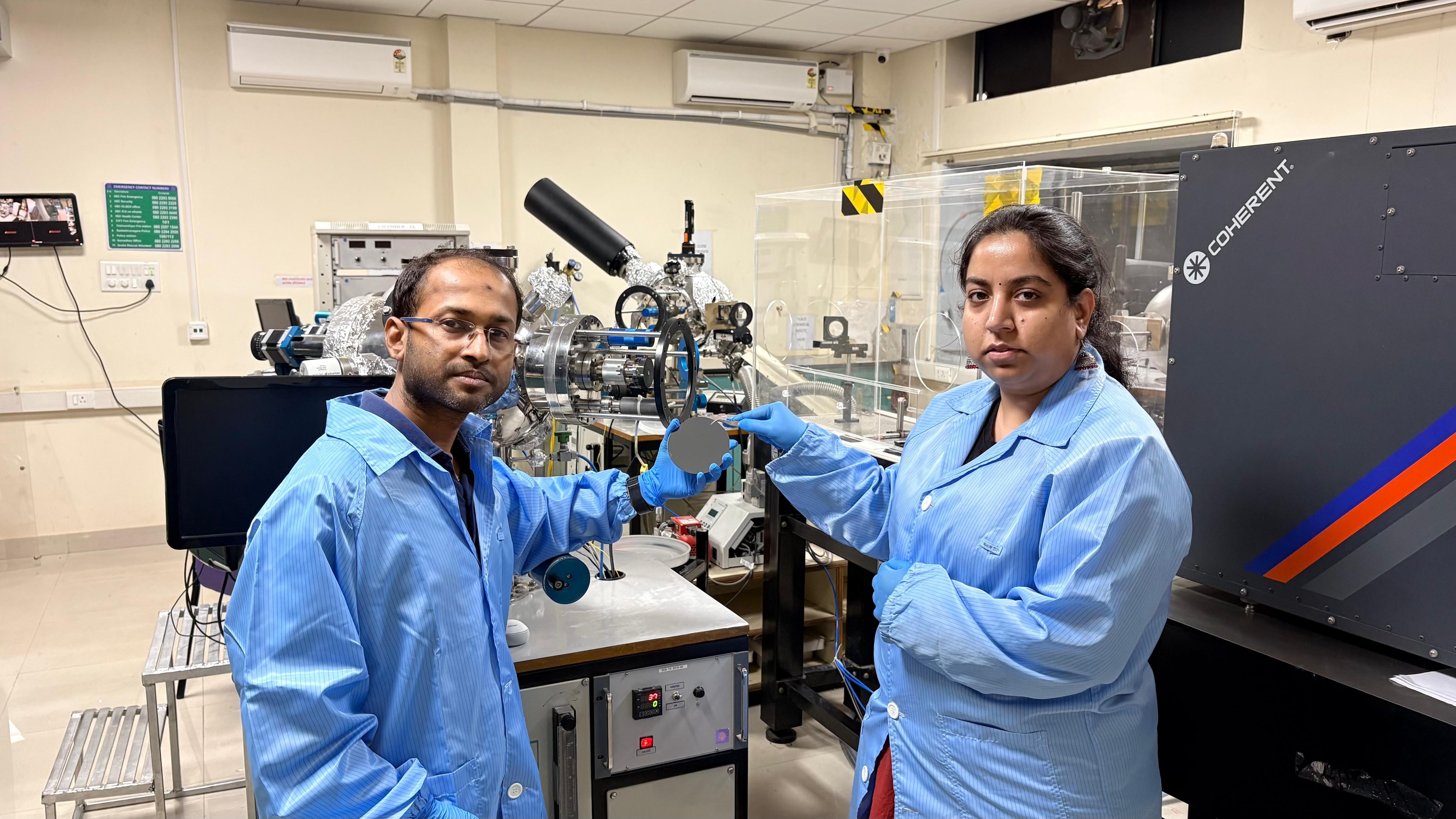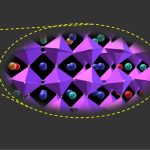
(Image: Garima Kaura/Sujit Das)
Modern wireless technologies, from 5G/6G communication systems to satellite electronics and adaptive sensors rely on materials that can rapidly respond to electric signals while remaining stable under changing operating conditions. However, creating environmentally friendly materials that are both highly responsive and compatible with silicon chip technology has remained a major challenge.
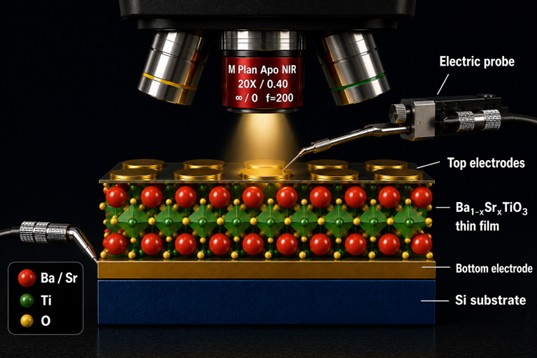
Researchers at IISc led by Sujit Das at the Materials Research Centre and collaborators have now developed a new class of lead-free oxide thin films that exhibit exceptionally high electrical tunability and stability. The team engineered ultra-thin films of barium strontium titanate (BST), a material whose electrical properties can be precisely controlled using electric fields. By carefully tuning the atomic composition and strain inside the films, the researchers created a unique mixed-phase state where multiple crystal structures coexist at the nanoscale.
This atomic-level “phase competition” dramatically enhances the material’s ability to respond to external electric fields, enabling record-high dielectric tunability in a lead-free thin-film system. Importantly, the films also remain stable over a broad range of temperatures and frequencies a key requirement for practical electronic devices.
The researchers further demonstrated integration of these films onto silicon substrates, an important step toward scalable manufacturing and real-world applications. The work was carried out in collaboration with Bharat Electronics Limited (BEL) and several leading international research groups, highlighting strong partnerships between academia and industry.
The findings could pave the way for next-generation tunable capacitors, adaptive microwave devices, reconfigurable communication systems, energy-efficient electronics, and future computing technologies. The work highlights how controlling matter at the atomic scale can unlock entirely new functionalities in electronic materials and help bridge the gap between fundamental materials research and future electronic technologies.