How scientists are improving hydrogen production and storage for real-world applications
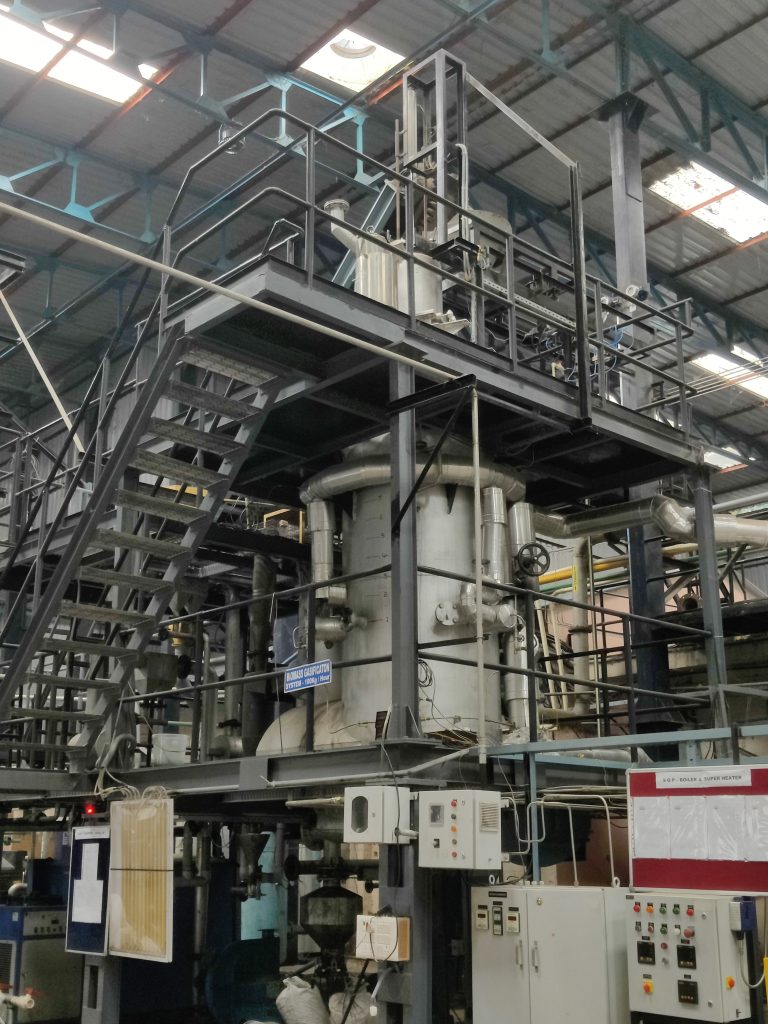
In the 1980s, researchers at IISc, were searching for indigenous materials to serve as alternative energy sources to fossil fuels. Around early 2000, they extended the search for materials that would generate hydrogen. That was when they came across a readily available natural resource – biomass.
Today, more and more researchers are turning to such natural sources to produce hydrogen as fuel.
“Green hydrogen is a relatively new term,” says S Dasappa, Advisor, at the Interdisciplinary Centre for Energy Research (ICER), IISc. “When we began work on the project, the question was different – can we use local materials to meet local needs? In today’s terms, is it “sustainable”?
The world requires an ever-increasing amount of energy for sustenance. To meet these demands sustainably, various alternative fuels are being considered. Among these, hydrogen is emerging as a promising solution, with about 5 million metric tons per year already in use in India. Its applications are diverse, ranging from energy generation to chemical synthesis.
While carbon currently dominates the energy landscape, hydrogen is one of the few other elements viable as an energy source in terms of both energetics and abundance. It is also more sustainable than carbon.
“Carbon combusts to CO2 and releases heat, whereas hydrogen releases steam and heat. The beauty is that while CO2 persists in the atmosphere as a greenhouse gas, steam – under atmospheric conditions – condenses to a liquid and does not have the same greenhouse impact. This is why people want to move away from hydro-carbon towards hydrogen,” explains Anand Shivapuji, Senior Research Scientist at the Combustion, Gasification and Propulsion Laboratory at the Interdisciplinary Centre for Energy Research, IISc.
However, replacing carbon with hydrogen entirely is not simple. The entire process of hydrogen production has to be sustainable, too, from generating hydrogen to safe and efficient storage and transportation. Most of the hydrogen generated today still comes from fossil fuels, a process which releases carbon dioxide into the atmosphere and is considered a grey resource with a large carbon footprint.
“The source of hydrogen production using renewables is classified as “green”. For example, in the case of electrolysis, with electricity from wind, solar or a combination of renewables, contributes towards generating green hydrogen,” says Shivapuji.
The large-scale adoption of hydrogen as a fuel also poses challenges, such as storage due to its light weight, safe handling and high purity requirements. Researchers at IISc have been exploring various solutions, some of which have shown promise.
Producing sustainably
When Dasappa and the researchers at the Centre for Sustainable Technologies (CST) began searching for alternative energy sources, they were keen on securing the energy needs towards pumping water to the agricultural fields, in the event of an oil crisis. They considered biomass to be a viable alternative, and they used biomass as a raw material to produce power using biomass gasification. Over the next decade, the technology was also applied in village electrification and industrial applications.
Biomass, being organic matter, contains carbon, hydrogen and oxygen compounds. During gasification, it is subjected to high temperatures and exposed to controlled oxidants such as air or oxygen, resulting in the production of hydrogen, methane, carbon dioxide, and carbon monoxide. The CO2 produced is equivalent to that taken up by the biomass during photosynthesis, making this a “carbon-neutral process”. (In comparison, fossil fuels contain carbon upon combustion, releasing CO2 that was sequestered millions of years ago, and burning or gasifying them increases their atmospheric amount, making the process carbon positive.)
“An acid test for the technology was the 1990 oil crisis,” says Dasappa. “Around this period, the technology was in the demonstration phase, and the Ministry of Renewable Energy had deployed a few gasification systems in Karnataka. The results were positive; 5 litres of diesel typically provided 5 hours of energy output, while replacing 75% of the fuel with [biomass-sourced] gas resulted in 20 hours of equivalent energy output.”
The team not only solved their original problem of fuelling engines but also developed a green hydrogen generation method long before the term gained popularity.
Another method of generating hydrogen sustainably is through electrolysis. This involves passing an electric current through water, which splits the water molecule and results in hydrogen production at one electrode and oxygen production at the other. However, the electricity used in the process should come from a renewable source for this to be classified as green hydrogen.
Storing securely
Even with cleaner production methods, the practical use of hydrogen relies on safe and efficient storage. Hydrogen, being the lightest element, poses significant challenges with respect to safe storage and transport. For example, 1 kg of hydrogen generates almost three times the energy that 1 kg of petrol generates. However, being a gas, it occupies a very large volume at room temperature. It must be stored at low temperatures and high pressures to contain it in a volume suitable for industrial or , for the transport sector. “A storage tank as large as an oxygen cylinder, for example, would only hold about as much hydrogen as two litres of petrol,” explains Shivapuji.
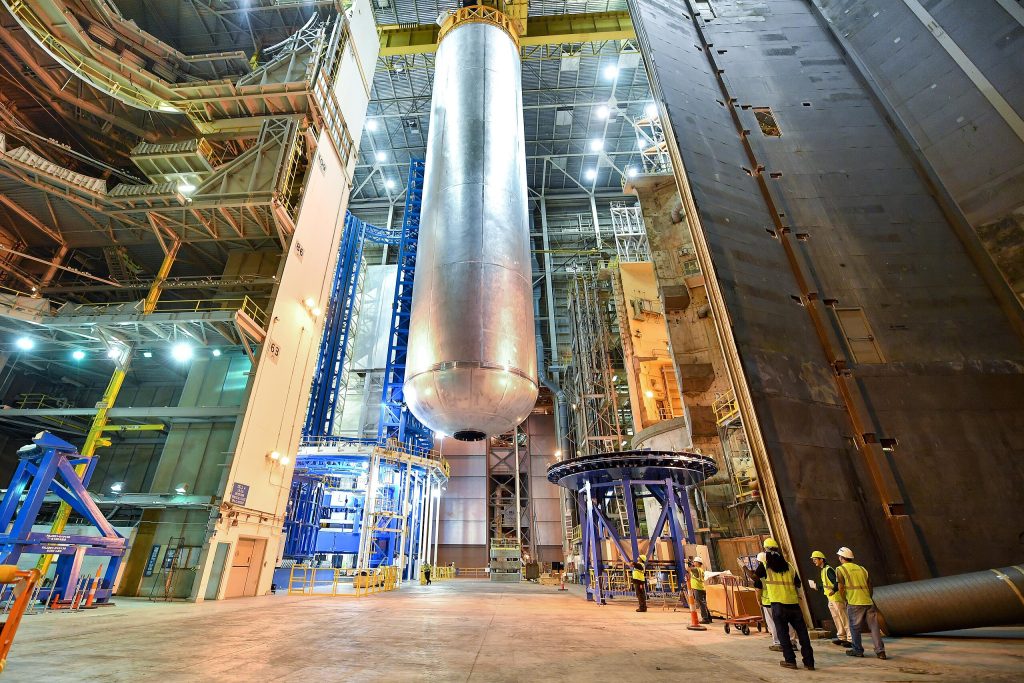
Scientists are working on more efficient methods to compress and store hydrogen, which require less energy input. Cryogenic technology cools the hydrogen to a very low temperature, causing it to liquefy; it has a lot of applications in the space sector, with scientists working to minimise boiling losses by building better insulators to reduce heating of stored hydrogen.
An interesting phenomenon, which can be leveraged for hydrogen storage, is the formation of metal hydrides. “Metals and their alloys tend to absorb hydrogen on cooling,” says Shivapuji. “Hydrogen stored in this manner can be released by simply heating the material. Currently, the storage efficiency is very low, so research is directed towards finding better materials and increasing the amount of hydrogen that can be absorbed by the metal.”
Though hydrogen has a wide range of potential applications, deploying it in areas where it has not been traditionally used can be tricky. Internal combustion engines, which use thermal energy, have been designed mainly for fossil fuels; they cannot, therefore, directly be adapted for hydrogen. So, some scientists are exploring innovative and sustainable ways to convert the chemical energy in hydrogen to other forms, such as electrical energy. One approach is fuel cells, which use chemical energy to generate an electric current using catalysts like platinum. In these cells, hydrogen produces electrons and protons – the latter moves across a semipermeable membrane to power an external circuit.
In recent years, governments have also taken cognisance of green hydrogen’s immense potential.
“IISc’s continued work in biomass gasification has contributed to the government’s positive stance on hydrogen. Our group has contributed to discussions as part of the National Green Hydrogen Mission, which includes incorporating hydrogen into railways as well as setting up plants all over the country,” adds Dasappa.
However, he highlights the importance of industrial guidance to ensure that the translation of technology to a commercial scale takes place smoothly. “Over a decade ago, due to a lack of policy support and champions, we weren’t able to take the technology forward, even though we were ahead of time.”
Despite these setbacks, Dasappa feels that the green hydrogen sector has a promising future. He says, “The government is looking to further this [hydrogen] technology, and [our] group is eager to take it to the next level.”